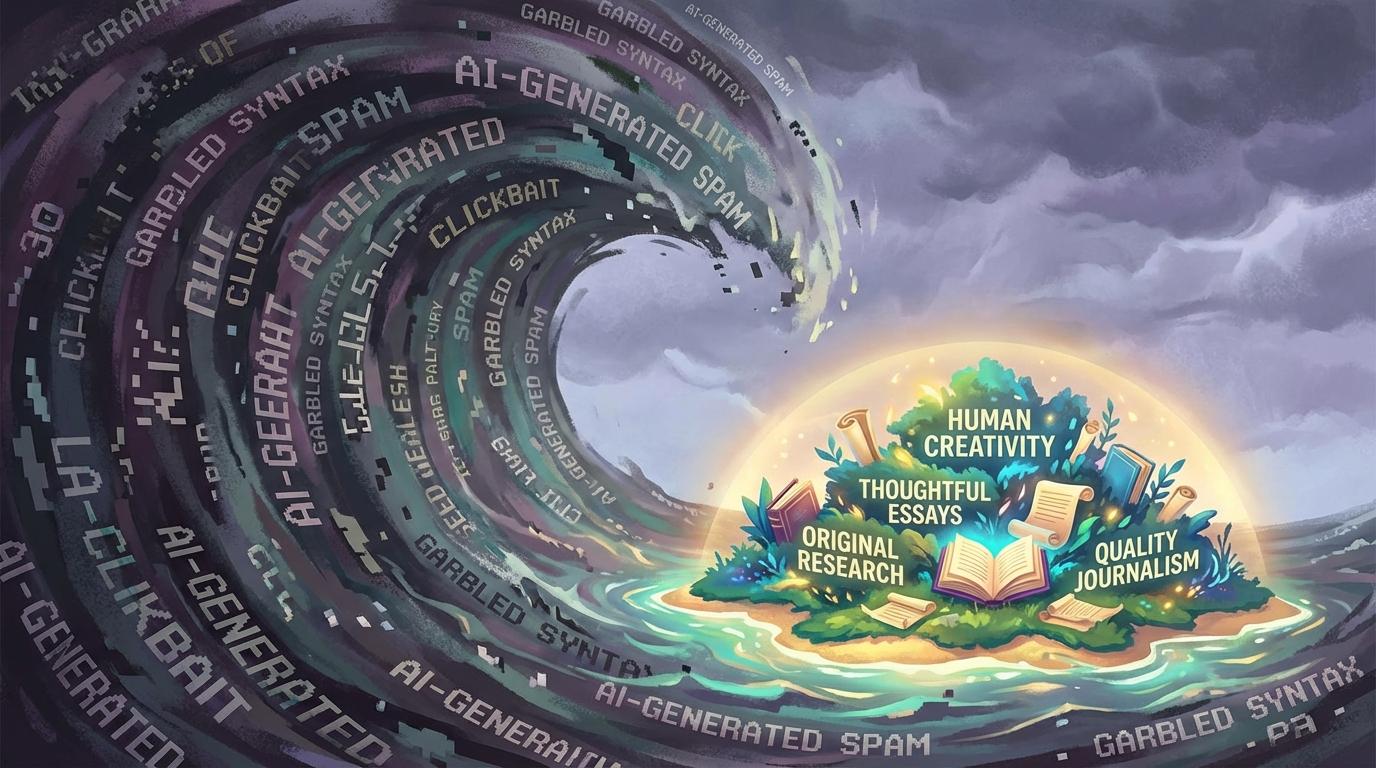
The rise of 'AI slop' threatens to flood the internet with low-quality content. This post explores how to combat this trend, addressing critical consumption, ethical AI development, and the role of human expertise. We also tackle the paradox of using AI assistance in content creation itself. AI is a tool to be utilised, like a scientific calculator or spellchecker.
Introduction: The Rise of AI Slop
The rapid advancement of Artificial Intelligence (AI) has unlocked incredible potential, transforming industries and streamlining workflows. However, this progress has also birthed a less desirable phenomenon: 'AI slop'. This term refers to the proliferation of low-quality, often nonsensical, content generated by AI tools, flooding the internet and threatening to drown out valuable, human-created work. You might also hear this referred to as low-quality AI content, or perhaps even spammy AI content.
Imagine searching for a reliable recipe online, only to be bombarded with pages of vague, AI-generated instructions that lead to a culinary disaster. This is the reality of 'AI slop' a flood of low-quality content threatening to drown out genuine expertise and useful information. These are tools to be utilised. In this post, we'll delve into what constitutes AI slop, how to combat it, and address the potential hypocrisy of using AI assistance in content creation itself.
Defining AI Slop: More Than Just Bad Writing
AI slop isn't simply poorly written text. It's characterised by several key traits:
Lack of Originality: AI often regurgitates existing information without adding fresh perspectives or insights.
Factual Inaccuracies: Despite advancements, AI models can still hallucinate facts or present outdated information as current.
Absence of Nuance: AI struggles with sarcasm, humour, and complex emotional contexts, resulting in bland and often inappropriate content.
Repetitive or Generic Language: A telltale sign of AI slop is the use of overly formal or repetitive phrasing, lacking the personality and creativity of human writing.
SEO Manipulation: Content heavily optimised for search engines, often at the expense of readability and value.
The sheer volume of this content is a major concern. As AI tools become more accessible and affordable, the barrier to entry for content creation lowers, leading to an exponential increase in AI-generated material.
Tackling the Tide: Strategies for Combating AI Slop
Addressing the problem of AI slop requires a multi-pronged approach:
1. Critical Consumption and Fact-Checking
We, as consumers, need to become more discerning. Question the information we encounter online, verify facts from multiple sources, and be wary of content that seems too generic or lacks a clear author.
2. Prioritising Human Expertise
Value and support content created by experts and experienced professionals. Human insights, critical thinking, and creativity remain essential for producing high-quality, informative, and engaging material.
3. Ethical AI Development and Usage
Developers must focus on creating AI models that prioritise accuracy, originality, and ethical considerations. This includes rigorous testing for bias, ensuring data privacy, and implementing transparency mechanisms to allow users to understand how the AI model works and the source of its information. Implement safeguards to prevent the generation of misleading or harmful content. Consider watermarking AI-generated content to increase transparency.
4. Improved AI Detection Tools
Develop more sophisticated tools to identify AI-generated content. While not foolproof, these tools can help platforms filter out low-quality material and promote human-created content.
5. Content Moderation and Algorithm Adjustments
Social media platforms and search engines should refine their algorithms to prioritize high-quality, original content and demote AI slop. Implement robust content moderation policies to address the spread of misinformation and spam.
The AI Assistance Paradox: Am I Contributing to the Problem?
It's fair to ask: if I'm using AI to help write this blog post, am I contributing to the very problem I'm criticising? The key lies in how AI is used. I'm not relying on AI to generate the entire post from start to finish. Instead, I'm using it as a tool to:
Brainstorm ideas: AI can help me explore different angles and perspectives on a topic.
Improve grammar and clarity: AI can identify and correct grammatical errors or suggest better phrasing.
Research information: AI can quickly gather relevant data and sources.
However, the final product is always edited, refined, and infused with my own unique voice and perspective. The goal is to enhance my writing process, not replace it entirely. The difference is the final level of human intervention and review, and the goal of providing value to the reader.
Conclusion: A Collaborative Future
AI has the potential to revolutionise content creation, but we must be mindful of its limitations and potential pitfalls. By adopting a critical mindset, prioritising human expertise, and promoting ethical AI development, we can navigate the 'AI slop' tsunami and ensure a future where technology enhances, rather than diminishes, the quality and value of online content.