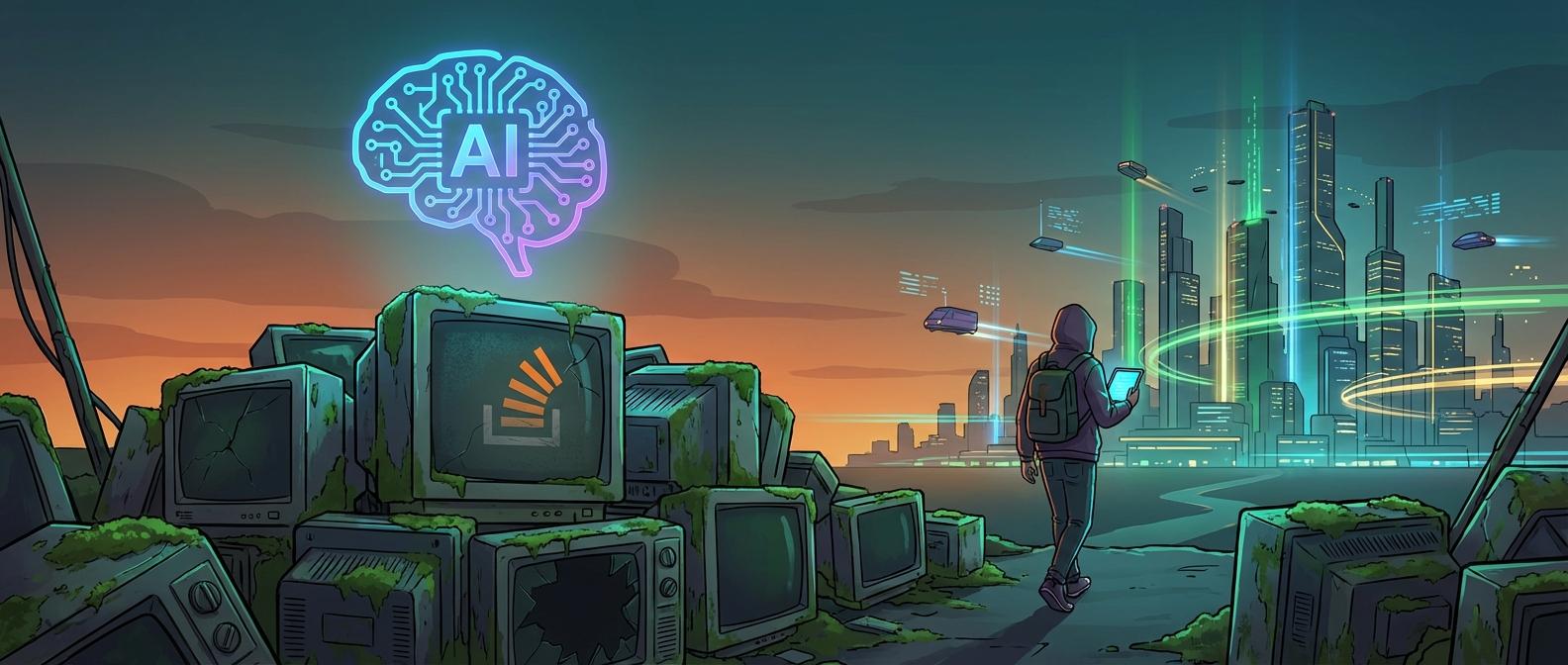
Stack Overflow's relevance is being challenged by AI and its unforgiving community. Is it heading for a 'slow death'? We explore how AI is changing the game and why a more welcoming platform is essential for the future of developer knowledge sharing.
The Decline of Stack Overflow: AI and Community Challenges
There's been a lot of chatter recently about the apparent decline of Stack Overflow. A recent article highlighted a rather dramatic 78% decrease in question volume. Is this the beginning of the end for the go to resource for developers worldwide? It's a complex issue, but two major factors seem to be playing a significant role: the rise of AI and Stack Overflow's… well, let's just say unwelcoming community.
The AI Revolution: Answering Questions Before They're Asked
Let's be honest, a huge chunk of developer queries are now being handled by AI. Tools like ChatGPT and Gemini, can often provide solutions in seconds, bypassing the need to trawl through Stack Overflow's search results. Need to understand how to implement a specific algorithm in Python? Just ask an AI. Stuck on a tricky React hook? The AI likely has the answer. This immediate gratification is incredibly appealing, especially when compared to the often arduous process of posting a question on Stack Overflow and hoping for a helpful (and non condescending) response.
Many of these AI resources have also signed agreements with these platforms to learn from them, which on the surface feels like a good idea. In theory, this should help supplement and sustain these resources. But what happens if that fails?
The Stack Overflow Community: Unwelcoming to Newcomers?
Ah yes, the Stack Overflow community. It's a rite of passage, almost a meme at this point, that you're not a "real" developer until you've been publicly shamed and mass downvoted for asking a 'duplicate' question or failing to adhere to some obscure formatting rule. It used to be a badge of honour, but now... not so much.
The harsh reality is that Stack Overflow's reputation for being unforgiving to newcomers is well earned. While experienced developers value accuracy and clarity, the aggressive policing of the site can be incredibly discouraging, especially for junior developers who are just starting out. It's a self defeating cycle: new developers are driven away, leading to a decline in active users and a stagnation of the community.
The Limits of AI: Why Human Expertise Still Matters
Despite the convenience of AI, it's crucial to remember that it's not a silver bullet. AI generated code can be buggy, incomplete, or simply wrong. It lacks the nuanced understanding and critical thinking that a human developer brings to the table. There are times when you need more than just a code snippet; you need context, experience, and the ability to discuss the problem with someone who understands the underlying complexities.
I recently experienced this firsthand. I was wrestling with an out-of-memory error while building an Amplify project. I asked an AI to solve the issue and it suggested various ways of aggressively removing things that could use up memory in the build process, but I had no success. Frustrated, I Googled the issue and stumbled upon a GitHub thread where someone else had encountered the same problem. The solution was a simple configuration change that the AI had completely missed. That thread, that human interaction, instantly solved my problem.
This highlights the crucial role of human driven knowledge sharing. AI can provide quick answers, but it can't replace the depth of understanding and collaborative problem solving that platforms like Stack Overflow offer...or *could* offer, if they adapt.
The Future of Developer Q&A: A Call for Change
We still need resources like Stack Overflow. In fact, we need them more than ever in the age of AI. As AI writes more and more code, the need for human oversight, discussion, and collaboration will only increase. However, the current model is unsustainable. Stack Overflow needs to address its community issues, foster a more welcoming environment for newcomers, and find new ways to incentivise high quality contributions. Perhaps integrating AI tools to assist with moderation and question routing could help.
For example, an AI could automatically detect and flag duplicate questions, suggest improvements to question formatting, and identify potentially offensive language in comments. Maybe rewarding helpful contributors with tangible benefits.
This could include offering Stack Overflow swag, free access to premium developer tools, or even monetary rewards for consistently providing high-quality answers. The current system is broken, and if Stack Overflow doesn't adapt, it risks becoming a relic of the past.
Ultimately, the future of developer Q&A depends on finding a balance between the speed and convenience of AI and the depth and nuance of human collaboration. We need to create platforms that are both informative and inclusive, where developers of all levels can feel comfortable asking questions, sharing their knowledge, and learning from each other.