Shutting down a project is never easy, but it is a vital part of the development lifecycle. Today I am reflecting on why I am sunsetting Vyzo, from the challenges of platform monopolies to the harsh economics of LLM API costs.
The Anatomy of a Difficult Decision
When we first built Vyzo, the premise was clear. Content creators were spending hours manually scrubbing through VODs to find highlights, so we built an AI-driven pipeline to automate narrative detection and clipping. We saw real potential. The architecture worked, and the core problem was validated. But in software engineering, you have to be brutally honest with yourself when the landscape shifts underneath you. Today, I am officially shutting down Vyzo. Here is a breakdown of the market realities and the infrastructure economics that led to this decision, and why sometimes, the best engineering move is knowing when to cut your losses.
1. The Platform Monopoly: Twitch Built It Natively
The biggest risk of building a third-party tool on top of a massive platform is that the platform can simply absorb your feature set. That is exactly what happened here. Twitch recently rolled out their own native Auto Clips infrastructure, effectively wiping out the need for third-party clippers. They matched our core offering and expanded upon it with a massive structural advantage:
Instant Availability: Because they control the source video, their system generates clips almost instantly right after the action happens.
Native Subtitles and Formatting: They automatically run speech-to-text to generate captions and optimise the output directly into a 9:16 vertical format for mobile viewing.
When the host platform can deliver AI-suggested, captioned, vertical clips natively with zero latency, a third-party wrapper loses its competitive edge.
2. The API Trap: LLM Rate Limits and Unit Economics
Even if we had tried to out-engineer Twitch native tools, we hit a massive infrastructure wall: The API Trap. Parsing hours of video transcripts to find narrative highlights is an incredibly token-heavy process. As we tried to scale, the strict rate limits imposed by the major LLM providers became a bottleneck. To process that volume of data reliably, you are essentially forced into large enterprise plans.
The unit economics of paying massive, recurring cloud API costs to process VODs, when the end-user expects the service to be cheap or free, simply did not warrant the investment. It was a classic case of compute costs outpacing the product value proposition.
3. The Pivot That Wasn't
When you hit a wall like this, the natural instinct is to pivot. We briefly explored taking the Vyzo architecture and applying it to other styles of long-form video, such as podcasts or webinars, or swapping out the underlying models to find a cheaper local alternative. But pivoting just to keep a codebase alive is an ego trap. The fundamental issue, the heavy token cost of parsing massive transcripts, remained the same regardless of the video source.
The Takeaway and What's Next
Shutting down a project you poured hours into is never fun, but it is a necessary part of the development lifecycle. Vyzo taught me a massive amount about handling unstructured data, managing LLM context windows, and the harsh realities of API rate limits. I am taking those architectural learnings, leaving the VOD clipping space to the platforms, and moving on to systems where I can actually control the infrastructure and the unit economics.
Right now, that means focusing heavily on Foundry. Up to this point, I have been using it strictly as my own internal tool, a governance methodology and architectural substrate to keep my local agent workflows in check. But after running into these exact API bottlenecks with Vyzo, I am starting to think it might be worth polishing up and releasing to the public. Engineers need a way to orchestrate AI without getting locked into enterprise cloud plans.
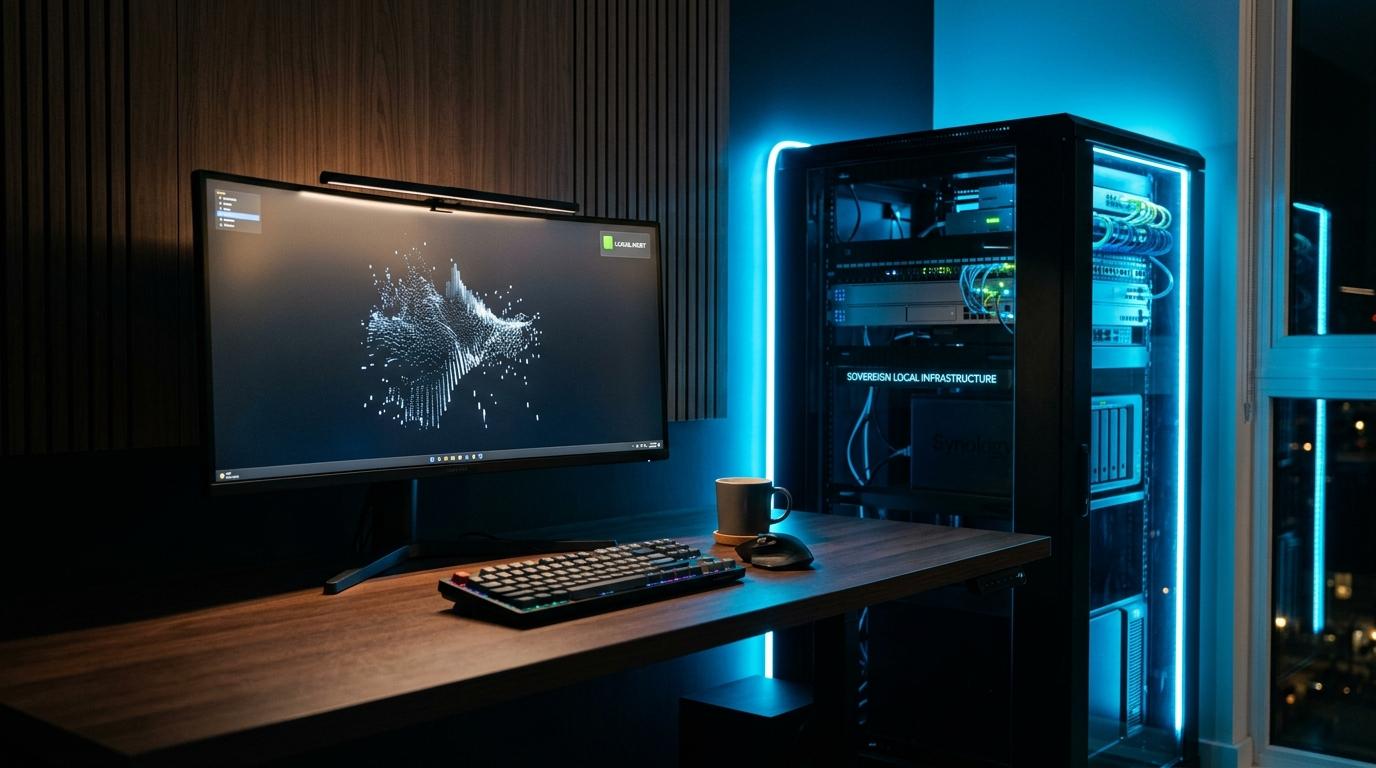
I also finally finished building out my new home server, which means I no longer have any excuses to put off updating OpenSwarm-os. Having dedicated local metal changes the game for testing decentralised multi-agent swarms. Vyzo was a great experiment, but it is time to get back to building sovereign infrastructure.