TEDWARD.NET · A WEEKLY DEV BLOG BY TED WARD
Dispatches from the sharp end of AI & software.
SHOWING 6 / 72 DISPATCHES — TOPIC: Web Development
ALL 72 POSTS ↗


The OpenSwarm: Achieving Emergent Multi-Agent Coordination via Latent Collaboration
Discover 'The OpenSwarm', a groundbreaking decentralised multi-agent system where coordination emerges from a shared 384-dimensional 'Neural Bus'. Explore how latent collaboration and semantic resonance allow autonomous agents to solve complex tasks without ever speaking to one another.

The One File That Makes Copilot 10x Smarter (And How to Automate It)
We often treat AI coding assistants like GitHub Copilot as simple search engines: we ask a question, get an answer, and move on. But the most powerful way to use GitHub Copilot isn't to ask better questions, it's to give it a better memory. Think of it as VS Code AI customisation for your projects.

Rust: Why This 'New' Language Is Suddenly Everywhere (And So Fast)
Rust is gaining popularity for its speed and safety. This blog post explores why companies are adopting Rust, focusing on its compile-time magic, runtime efficiency, and real-world examples like Turbopack. Learn why Rust is becoming a favourite for performance-critical applications.
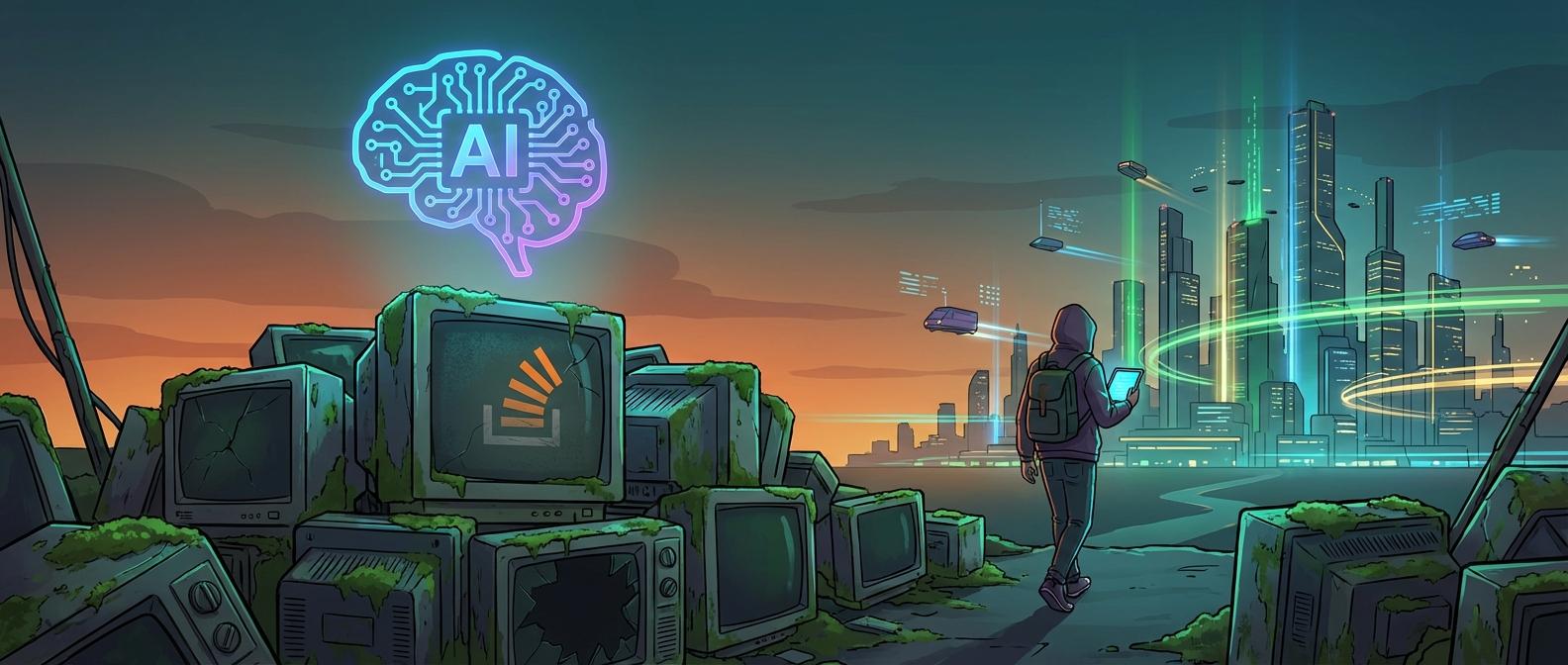
Stack Overflow's Slow Death: AI and the Elitist Gauntlet
Stack Overflow's relevance is being challenged by AI and its unforgiving community. Is it heading for a 'slow death'? We explore how AI is changing the game and why a more welcoming platform is essential for the future of developer knowledge sharing.